Nikole Sweet Casting in Budapest: A Czech Performer Meets Pierre Woodman
Written by PornGPT
Czech actress Nikole Sweet arrived in Budapest on June 13, 2024, for a casting session with French director Pierre Woodman. What followed was a long conversation about confidence, camera presence, ambitions, boundaries, and the strange mixture of preparation and spontaneity that defines an on-camera audition.
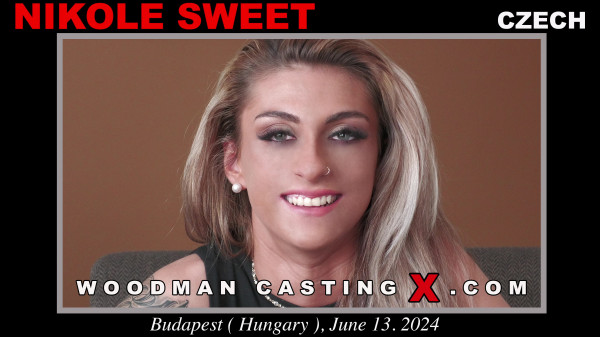
Visit Woodman Casting X and watch this scene!
Nikole Sweet Arrives in Budapest for Her June 2024 Casting
Budapest has played host to countless casting sessions over the years, becoming one of the European industry’s most familiar meeting points for performers, photographers, agents, and directors. On June 13, 2024, it was Czech actress Nikole Sweet who stepped into that environment for a meeting with French director Pierre Woodman.
The atmosphere at the beginning was deliberately simple. There was no elaborate set and no attempt to make the room look more glamorous than it really was. The purpose of the meeting was conversation first: understanding who Nikole was, how she behaved in front of a camera, how comfortable she felt answering unexpected questions, and whether her personality translated naturally on screen.
Woodman greeted her casually.
“Hello, Nikole. Comfortable?”
“Yes,” she replied with a small smile. “A little nervous, but comfortable.”
“A little nervous is normal.”
“I was hoping you would say that.”
He laughed.
“If somebody arrives and tells me they are never nervous, I become suspicious.”
Nikole relaxed slightly.
“So nervous is good?”
“Not exactly. But it means you understand that the moment matters.”
The first exchanges revolved around her journey and her impressions of Budapest.
“You came from the Czech Republic today?”
“Yes. The trip was easy. I have been to Budapest before, but not for something like this.”
“What is different today?”
“Today I know there is a camera watching everything.”
“The camera is already bothering you?”
“No. I notice it.”
“That is different.”
“Yes,” she agreed. “I think after five minutes I will forget about it.”
That answer interested Woodman because forgetting the camera, at least partially, is often one of the strongest indicators of natural screen presence.
He continued.
“What do you expect from a casting?”
“I expect questions. Maybe strange questions.”
“Definitely strange questions.”
“Then I am prepared.”
“You cannot prepare for strange questions.”
Nikole laughed.
“Then I am prepared to be unprepared.”
It was the kind of quick response that immediately changed the rhythm of the conversation. Rather than behaving like someone attempting to give ideal answers, Nikole appeared willing to play with the situation.
Woodman asked about her background, her interests, the reasons she had chosen to work in front of a camera, and what she believed distinguished her from other performers.
“I don’t know if I should say that I am different,” she admitted.
“Why?”
“Because everybody says that.”
“True.”
“I would rather say that I am curious.”
“Curious about what?”
“About people. About cameras. About seeing what happens when you try something you haven’t done before.”
“That is already more interesting.”
Nikole leaned back slightly.
“Better answer?”
“More honest answer.”
This conversational style recalled other casting meetings documented in the same series, where the decisive moments often came not from rehearsed introductions but from small unscripted exchanges. Lil Elfie’s Budapest casting in June 2026 similarly developed through rapid questions and spontaneous answers that gradually revealed more personality than a formal interview could have done.
For Nikole, the same process was beginning.
Woodman looked at her for a moment before asking another question.
“Are you patient?”
“Sometimes.”
“That means no.”
“It means I am honest.”
“Are you stubborn?”
“Yes.”
“Very?”
“Enough.”
“What happens when somebody tells you no?”
“I ask why.”
“And if they don’t give you a reason?”
“Then I ask again.”
Woodman smiled.
“Definitely stubborn.”
“I warned you.”
The early nervousness had almost disappeared.
Pierre Woodman Questions Nikole Sweet About Confidence and Camera Presence
As the session moved forward, the questions became less introductory and more focused on personality.
Woodman wanted to know how Nikole reacted under pressure and how much of her confidence was natural rather than performed for the camera.
“You seem comfortable now,” he observed.
“I told you. Five minutes.”
“You remember saying that?”
“Yes.”
“So you count the minutes during a casting?”
“No. I just like being right.”
“Stubborn again.”
“Exactly.”
The exchange caused both of them to laugh.
Woodman then asked her how she saw herself.
“Confident?”
“Usually.”
“Shy?”
“Sometimes.”
“Those two things can exist together?”
“Of course.”
“Explain.”
Nikole paused.
“You can be confident about who you are and still be shy when you enter a room full of people you don’t know.”
“That is a good answer.”
“Another honest answer.”
“Maybe you prepared everything.”
“No chance.”
He changed direction immediately.
“What scares you?”
“That is a big question.”
“I told you there would be strange questions.”
“Failure, maybe.”
“Why failure?”
“Because sometimes you imagine something going perfectly before you do it.”
“And then?”
“And reality does whatever it wants.”
Woodman nodded.
“Reality usually wins.”
“Yes.”
“So what do you do when something goes wrong?”
“Try again.”
“No drama?”
“Maybe five minutes of drama.”
“Only five?”
“Ten if it is serious.”
Again the room became lighter.
The casting was working precisely because it felt less like a questionnaire and more like a conversation capable of changing direction at any moment.
Woodman asked her to look directly toward the camera.
“Forget me for a moment.”
“Okay.”
“Look at the lens.”
Nikole did.
“What are you thinking?”
“That this is strange.”
“Why?”
“Because you’re standing here asking me what I’m thinking while telling me to ignore you.”
“That is the test.”
“A confusing test.”
“Good.”
She maintained eye contact with the lens.
“What now?”
“Don’t ask me. Decide.”
Nikole smiled toward the camera.
“Hello, mysterious person watching this in the future.”
Woodman laughed from behind it.
“That was not what I expected.”
“You told me to decide.”
“Exactly.”
It demonstrated something useful: rather than freezing when instructions became vague, Nikole filled the empty space herself.
This had also been noticeable in Lili White’s Budapest casting in August 2026, where conversational improvisation became a central part of the session as the director repeatedly changed subjects to see how naturally she adapted.
With Nikole, adaptability seemed equally important.
Woodman returned to his chair.
“Do you like improvisation?”
“I think so.”
“You think?”
“I like it when I know roughly what we are doing.”
“That is not complete improvisation.”
“I need at least one small map.”
“And if there is no map?”
“I make one.”
Woodman nodded.
“Good answer.”
“Honest answer number three.”
“You are keeping score?”
“Yes.”
“How many bad answers?”
“Zero.”
“That is suspicious.”
“You said you become suspicious when people are too confident.”
“Exactly.”
Nikole smiled.
“Then maybe one bad answer.”
“Which one?”
“I won’t tell you.”
Much of a filmed casting depends on these apparently insignificant details. A person may look striking in photographs yet become stiff as soon as the camera begins recording. Another may initially appear reserved but become increasingly interesting once conversation starts.
Nikole belonged closer to the second category. Her strongest moments did not come when she was attempting to pose or present a carefully controlled image. They came when she forgot that she was expected to behave in any particular way.
Woodman asked her about the difference between photographs and video.
“Photos are easier,” she said.
“Why?”
“One second can look perfect.”
“And video?”
“You have to survive all the seconds.”
He laughed.
“That is a good definition of cinema.”
“I should copyright it.”
“Too late. It’s recorded.”
“Then I want royalties.”
The conversation continued for a long time, moving between serious questions and playful ones.
“What is your best quality?”
“Curiosity.”
“You already said that.”
“Then consistency.”
“Worst quality?”
“Impatience.”
“Favorite city?”
“Prague.”
“Budapest?”
“Ask me tonight.”
“Coffee or tea?”
“Coffee.”
“Morning or night?”
“Night.”
“Planning or improvising?”
“Planning first. Improvising after the plan fails.”
“That happens often in film.”
“Then I am ready.”
Nikole Sweet Reflects on the Casting and What Comes Next
By the final section of the session, the initial formality had almost completely disappeared. Nikole’s posture was more relaxed, her answers came faster, and Woodman no longer needed to keep the conversation moving with constant prompts.
He asked what she had learned from the previous hour.
“That you ask too many questions.”
“That is your conclusion?”
“One conclusion.”
“And the other?”
“That being filmed becomes normal surprisingly quickly.”
“You forgot the camera?”
“Not completely.”
“That’s better.”
“Why?”
“Because completely forgetting the camera can also be a problem. You need to know where it is without being controlled by it.”
Nikole considered the idea.
“So you need to forget it and remember it at the same time.”
“Exactly.”
“That sounds impossible.”
“Cinema is full of impossible things.”
The discussion then turned toward professional expectations.
“What do you want from this work?” Woodman asked.
“Experience.”
“Only experience?”
“No. I want to become good at it.”
“What does good mean?”
“Natural. Interesting. Not looking like I am thinking about every movement.”
“That takes time.”
“I know.”
“Are you patient enough?”
“You already discovered I am impatient.”
“So?”
“I will have to learn.”
Woodman asked whether she watched herself on camera.
“Sometimes.”
“Do you like it?”
“Not always.”
“Why?”
“You notice everything.”
“Everyone does.”
“Small expressions. Weird movements.”
“Those things can also make somebody interesting.”
Nikole nodded.
“I suppose perfection would be boring.”
“Very boring.”
“So mistakes are useful?”
“Sometimes.”
“That is good news.”
The mood throughout the final part remained conversational rather than dramatic. There was no artificial attempt to turn the casting into a story with a predetermined conclusion. The most revealing element was simply how Nikole evolved during the meeting.
At the beginning, her answers were short and cautious.
By the end, she was challenging questions, joking with the director, and occasionally turning questions back toward him.
“Now I ask you something,” she said.
“Go ahead.”
“Can you tell immediately if somebody works well on camera?”
“No.”
“Really?”
“Sometimes I have an impression immediately. But people surprise you.”
“In a good way?”
“And a bad way.”
“Which am I?”
Woodman smiled.
“You want the result before the casting is finished?”
“Of course.”
“Impatient.”
“Yes.”
“I told you already.”
“So no answer?”
“No answer yet.”
Nikole shook her head.
“Very diplomatic.”
“No. Experienced.”
She laughed.
“That is what diplomatic people say.”
The conversation continued.
“If you could redo the first five minutes, what would you change?” Woodman asked.
“Nothing.”
“Even the nervousness?”
“No.”
“Why?”
“Because then you can see the difference between the beginning and now.”
“That is true.”
“And maybe that is the interesting part.”
For a casting recording, it was an insightful observation. The purpose is not simply to document how somebody looks at one frozen moment. It records transformation: the transition from entering an unfamiliar room to gradually becoming comfortable enough for personality to emerge.
Nikole’s June 13, 2024 meeting in Budapest followed precisely that trajectory.
The session began with guarded smiles and careful replies. It ended with fast exchanges and easy humor.
Woodman asked one final question.
“Would you do another casting tomorrow?”
“Tomorrow?”
“Yes.”
“No.”
“Why not?”
“I need one day without questions.”
“And the day after tomorrow?”
“Maybe.”
“Only maybe?”
“I learned from you. Never give the final answer too quickly.”
Woodman laughed.
“Now you understand.”
The cameras were almost ready to stop.
Nikole glanced toward the lens again.
“Is that really everything?”
“For today.”
“That sounds suspicious.”
“Why?”
“Because directors always say ‘for today.’”
“You are learning quickly.”
She smiled.
“Then maybe the casting worked.”
Whether considered as an audition, an interview, or simply a recorded first meeting, Nikole Sweet’s Budapest casting offered a revealing portrait of a performer becoming increasingly at ease in an unfamiliar situation.
The most memorable aspect was not any single question. It was the gradual disappearance of the barrier between interviewer and subject.
What started as a conventional exchange—
“Name?”
“Nikole.”
“From?”
“The Czech Republic.”
—eventually became something much more spontaneous.
“Still nervous?” Woodman asked near the end.
Nikole shook her head.
“No.”
“Not even a little?”
“No.”
“What changed?”
She looked toward the camera one final time.
“I stopped trying to give you the right answers.”
“And started giving me what?”
“My answers.”
That distinction may have been the most important moment of the entire session.
Download complete video at Woodman Casting X