Helena Cholene Casting in Budapest: A French Newcomer Meets Pierre Woodman
Written by PornGPT
French actress Helena Cholene arrived in Budapest on July 27, 2026, for a casting session with director Pierre Woodman. What followed was a long, conversational meeting built around first impressions, confidence, career expectations, and Helena’s ability to remain natural in front of the camera.
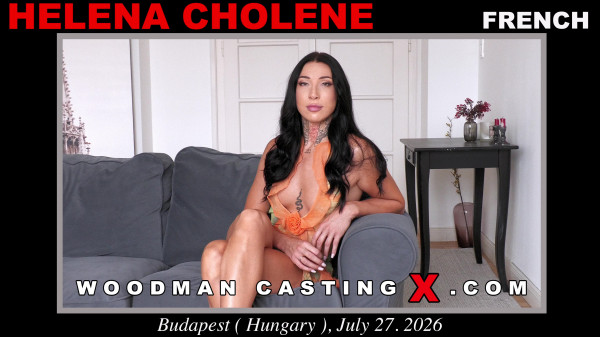
Visit Woodman Casting X and watch this scene!
Helena Cholene Arrives in Budapest for Her July 2026 Casting
Budapest had already been extremely busy during the summer of 2026, with a constant flow of performers traveling through the Hungarian capital for meetings, photography sessions, productions, and castings. On July 27, another name was added to that growing list: French actress Helena Cholene.
For Helena, the meeting represented an opportunity to introduce herself beyond photographs and online profiles. A casting room can reveal details that a portfolio never captures: how someone speaks, whether they listen carefully, how they react to unexpected questions, and whether their personality remains visible once a camera is switched on.
Pierre Woodman began the session in his usual conversational manner, allowing Helena a few minutes to become accustomed to the surroundings before moving toward more structured questions.
“Relax,” Pierre told her. “There is no exam here.”
Helena smiled.
“It still feels a little like one.”
“Why?”
“Because you are watching everything.”
“I am listening to everything,” Pierre corrected her. “That is different.”
Helena laughed.
“Maybe that’s even worse.”
Pierre asked her to introduce herself naturally, without trying to deliver a prepared biography.
“My name is Helena,” she said. “I am French, obviously, and I have been traveling quite a lot recently.”
“Obviously French?”
“You heard my accent immediately.”
“I hear many accents.”
“And mine?”
“Definitely French.”
“That is not necessarily a problem.”
“I didn’t say it was.”
Their exchange immediately established the tone of the session. Helena appeared slightly cautious at first, yet she was comfortable enough to answer back rather than simply agreeing with everything the director said.
That ability to maintain a conversation interested Pierre.
“What made you come to Budapest?”
“Curiosity first.”
“Only curiosity?”
“No. Work too.”
“Better answer.”
“You prefer honesty?”
“Always.”
“Then curiosity and work. In that order.”
Pierre asked Helena about the atmosphere she had expected before arriving.
“I imagined something much more stressful,” she admitted.
“And now?”
“Now I think you are trying to make me talk until I forget there is a camera.”
Pierre glanced toward the camera.
“Is it working?”
“A little.”
“Then we continue.”
The July 2026 period had already produced several interesting Budapest casting sessions. Earlier that summer, Colombian performer Valery Ponce had also sat down with Woodman for a long introductory meeting centered on personality, expectations, and adapting to an unfamiliar professional environment.
Lil Elfie’s June 2026 Budapest casting had likewise demonstrated how much Woodman’s interview style depended on spontaneous conversation rather than formal questioning.
Helena’s personality, however, was quite different. Her answers were shorter, more controlled, and occasionally playful.
“You think too much before answering,” Pierre observed.
“Maybe.”
“There. You just did it again.”
Helena smiled.
“I like choosing my words.”
“Actors don’t always have time to choose.”
“Then maybe I will learn to choose faster.”
Pierre nodded.
“That is a good answer.”
Pierre Woodman Questions Helena Cholene About Confidence, Acting and Ambition
As the conversation continued, Pierre gradually shifted toward Helena’s ambitions.
“What do you want from this profession?”
“That is a big question.”
“I like big questions.”
“I want experiences.”
“That sounds very philosophical.”
“It is easier than saying I want success.”
“Do you?”
“Of course.”
Pierre leaned back.
“Everybody wants success. Few people can explain what success means.”
Helena considered the question.
“For me, success means choosing.”
“Choosing what?”
“The people I work with. The projects. Where I travel. When I say yes and when I say no.”
Pierre nodded.
“That is already a better definition.”
Their conversation then moved toward performance and the difference between posing for photographs and maintaining a presence on video.
“Do you prefer photography or filming?” Pierre asked.
“Photography is easier.”
“Why?”
“Because one good second can become a good picture.”
“And video?”
“You need many good seconds.”
“Exactly.”
Helena laughed.
“I knew you were going to say that.”
Pierre asked her to look directly toward the camera.
“Do not pose.”
“I am not posing.”
“You are.”
“How?”
“You changed your expression immediately.”
Helena relaxed her face.
“Better?”
“Much better.”
“That feels strange.”
“Natural things often feel strange when somebody asks you to do them deliberately.”
“That sounds like another philosophical sentence.”
“No, that one is practical.”
Pierre encouraged Helena to speak directly to the camera for a moment.
“What should I say?”
“Anything.”
“That is the hardest instruction.”
“Tell the camera what you had for breakfast.”
Helena stared into the lens.
“Coffee.”
Pierre waited.
“And?”
“And coffee.”
“No food?”
“I was nervous.”
“So you arrived at a casting without eating?”
“Yes.”
“That is a terrible professional strategy.”
“I know.”
“You should write that down.”
Helena laughed again.
“Rule number one: eat before meeting Pierre Woodman.”
“Exactly.”
These apparently insignificant exchanges served an important purpose. By moving away from rehearsed questions, Pierre could observe how Helena behaved when she had no prepared response.
He then returned to her professional experience.
“What are you good at?”
“Listening.”
“That is useful.”
“I learn quickly too.”
“What are you bad at?”
Helena hesitated.
“Waiting.”
Pierre laughed.
“You chose the wrong profession.”
“I know.”
“Film sets involve waiting.”
“I am discovering that.”
“Sometimes hours.”
“Don’t tell me that.”
“And then everything happens in five minutes.”
“That sounds chaotic.”
“It can be.”
Helena appeared particularly interested whenever Pierre discussed the realities of production rather than the glamorous image frequently associated with filmmaking.
“What surprises newcomers most?” she asked.
“The amount of preparation.”
“Not the camera?”
“No. Cameras are easy. People are complicated.”
“Directors too?”
“Especially directors.”
Helena smiled.
“At least you admit it.”
Throughout this middle section of the casting, the balance between interviewer and interviewee became less rigid. Helena began asking questions of her own, turning the session into something closer to a conversation between two professionals trying to understand whether their approaches might be compatible.
“Do you decide immediately about someone?” she asked.
“Sometimes.”
“And sometimes?”
“I need to think.”
“What makes the difference?”
“Presence.”
“What does that mean?”
“It means I remember someone after they leave.”
Helena paused.
“That sounds difficult to measure.”
“It is.”
“So how do I know if I have it?”
“You don’t.”
“Very reassuring.”
Pierre smiled.
“I never promised reassurance.”
Helena Cholene Leaves a Strong First Impression During Her Budapest Meeting
By the final part of the casting, Helena appeared considerably more relaxed than she had at the beginning. Her posture changed, her answers became longer, and she occasionally interrupted Pierre with questions rather than waiting for him to finish.
Pierre noticed.
“You are different now.”
“How?”
“You stopped thinking about the camera.”
Helena glanced toward it.
“Now I am thinking about it again.”
“That was a mistake.”
“Your fault.”
“Probably.”
He asked her what she thought she had learned during the session.
“That you ask strange questions.”
“Besides that.”
“That being comfortable on camera is not exactly the same as looking good in pictures.”
Pierre nodded.
“Very important.”
“And that talking naturally is surprisingly difficult when somebody tells you to talk naturally.”
“Also true.”
Helena then turned the question around.
“What did you learn?”
“About you?”
“Yes.”
“You are cautious.”
“Is that bad?”
“No.”
“Anything else?”
“You observe before you decide.”
“That sounds like what you do.”
“Maybe.”
“So we are similar.”
Pierre shook his head.
“Do not go too far.”
Helena laughed.
The director then asked her whether she had enjoyed the casting.
“Yes.”
“That answer was too fast.”
“You complain when I think and when I don’t think.”
“Correct.”
“Then there is no winning.”
“There is no winning in interviews.”
Helena pretended to consider leaving.
“I should go.”
“We are almost finished.”
“You said that ten minutes ago.”
“I am a director. Time works differently.”
Their humor had become one of the defining elements of the meeting. Helena never attempted to dominate the conversation, but she also refused to disappear into polite, predictable answers.
Pierre eventually returned to a more serious question.
“If you continue working in this industry, what do you want people to remember about you?”
Helena remained silent for several seconds.
“That I was myself.”
Pierre waited.
“That is all?”
“Yes.”
“No character?”
“No.”
“No invented image?”
“No.”
“Interesting.”
“Why?”
“Because almost everyone invents an image eventually.”
“Maybe I will too.”
“You probably will.”
“But hopefully it will still look like me.”
Pierre smiled.
“That is probably the most realistic answer you gave today.”
As the session approached its end, Helena seemed surprised by how quickly the meeting had passed.
“How long have we been talking?” she asked.
“Long enough.”
“That means you don’t know.”
“I know.”
“You just won’t tell me.”
“Exactly.”
Pierre thanked her for coming and asked whether she had anything else she wanted to add before the camera stopped.
Helena turned toward the lens one final time.
“I arrived nervous, I forgot breakfast, I was interrogated about philosophy, and apparently I think too much.”
Pierre’s voice came from behind the camera.
“Excellent summary.”
Helena continued.
“But Budapest is beautiful, the conversation was interesting, and I survived.”
“Barely.”
“Completely.”
“Any message for people watching?”
She thought briefly.
“Eat breakfast before castings.”
Pierre laughed.
“There. Finally useful professional advice.”
The camera remained on for a few additional seconds as Helena laughed and shook her head.
What made Helena Cholene’s July 27, 2026 Budapest casting memorable was not a dramatic revelation or rehearsed performance. Instead, it was the gradual transformation visible throughout the meeting. The cautious woman who entered the room carefully measuring her answers had become noticeably more spontaneous by the end.
For Woodman, such changes during a casting can reveal more than any résumé. The point is not simply to record someone’s appearance, but to observe how a personality develops once initial nervousness disappears.
Helena demonstrated patience, humor, curiosity, and a willingness to question the director rather than merely answering him. Her exchanges with Pierre also showed an instinctive understanding of conversational rhythm—knowing when to answer seriously and when a lighter response worked better.
“Final question,” Pierre said.
“You already said we were finished.”
“Directors can change their minds.”
“Fine. One last question.”
“Would you come back?”
Helena smiled.
“To Budapest?”
“To another casting.”
“That depends.”
“On what?”
“Whether there is breakfast.”
Pierre laughed.
“Deal.”
It was an appropriately playful ending for a session that had begun with visible caution and gradually developed into an easy conversation. Helena Cholene left the Budapest casting having shown more than a camera-ready appearance. She had revealed the quality Woodman repeatedly searches for during these meetings: the ability to remain recognizably herself once the interview stopped feeling like an interview.
Download complete video at Woodman Casting X