Bonnie Woods Meets Pierre Woodman in Budapest: A Casting at the Crossroads of Cinema and Geopolitics
Written by PornGPT
On a gray November morning in Budapest, Russian actress Bonnie Woods walked into a studio that felt less like a film set and more like a diplomatic chamber. Her casting with French director Pierre Woodman on November 9, 2025, unfolded as a conversation about cinema, borders, language, and the quiet power of cultural exchange in a tense geopolitical era.
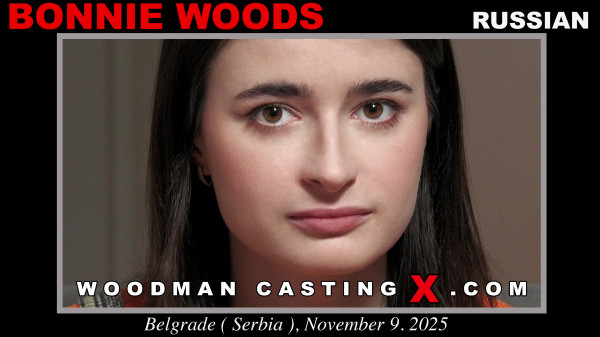
Visit Woodman Casting X and watch this scene!
Part 1: Budapest as Neutral Ground — Cinema Beyond Borders
Budapest has long served as a crossroads for European cinema, but in late 2025 it carried a particular symbolism. With relations between Russia and the European Union strained, the Hungarian capital functioned as a practical and symbolic neutral ground. Bonnie Woods arrived the evening before the casting, stepping into a city whose layered history mirrors Europe’s own negotiations with power and identity.
“I’ve filmed in many places,” Bonnie said as she greeted Pierre Woodman the next morning, “but Budapest feels like a conversation between East and West.”
Woodman smiled, offering coffee before the cameras were even mentioned. “That’s why I like to work here. The city doesn’t shout. It listens.”
The casting session began not with instructions but with questions. Woodman asked about Bonnie’s background, her training in Moscow, and her move toward international projects. The geopolitical subtext was unavoidable, yet both treated it with care.
“I don’t want politics to define my roles,” Bonnie explained. “But I know it follows me. People hear my accent and assume a story.”
“And that story can be rewritten,” Woodman replied. “Cinema has always been better at nuance than politics.”
This exchange set the tone. The casting was framed as collaboration rather than audition, a space where artistic intent could exist independently of state narratives. For a movie and geopolitics blog, this moment matters: it shows how cultural production can quietly resist the binaries imposed by international tension.
Budapest’s studios, multilingual crews, and long history of hosting foreign productions made the city an ideal stage. Bonnie noted how natural it felt to move between languages during the session.
“French, English, a little Russian, even some Hungarian in the hallway,” she laughed. “It’s like diplomacy, but friendlier.”
Woodman nodded. “Film crews are the best diplomats. We solve problems with coffee and patience.”
- my18teens – cute pale skin girl fingering her hairy pussy (Bonnie Woods)
- my18teens – cute girl with very hairy pussy masturbates (Bonnie Woods)
- Bambi Keutass (Woodman Casting X)
Part 2: Inside the Casting Room — Dialogue as Direction
Unlike traditional castings, this session relied heavily on conversation. Woodman positioned the camera but spent more time seated across from Bonnie than behind the lens.
“Tell me how you see yourself on screen,” he asked.
Bonnie paused, choosing her words carefully. “I want to be seen as precise. Not loud. Not stereotyped.”
“That restraint,” Woodman said, “is interesting. Many actors think intensity means volume.”
As the camera rolled, he offered minimal direction. Instead, he posed scenarios, asking Bonnie to react, to improvise subtle emotional shifts. Their dialogue continued between takes.
“You’re thinking too much,” Woodman observed gently.
“That’s very Russian of me,” Bonnie replied with a smile.
“Then let’s keep the depth but lose the weight,” he said. “Imagine you’re crossing a border with nothing to declare.”
Bonnie adjusted instantly, her performance lightening without losing focus. The exchange highlighted Woodman’s approach: direction through metaphor rather than command. It also reflected a broader geopolitical truth—movement across borders often requires adaptation without erasure.
During a break, the conversation turned explicitly to geopolitics.
“Do you worry,” Woodman asked, “that working abroad changes how you’re perceived at home?”
Bonnie considered this. “Perception is already fractured. But art gives me a way to speak without speeches.”
“That’s why casting matters,” he replied. “Who we choose to show on screen becomes a quiet statement.”
The casting continued for hours, punctuated by dialogue that blurred the line between interview and rehearsal.
“You listen very closely,” Woodman noted at one point.
“In my country,” Bonnie said, “listening is sometimes safer than speaking.”
Woodman met her gaze. “On set, speaking through performance is the safest language there is.”
This mutual respect transformed the session into a shared exploration rather than a test. For observers interested in how cinema intersects with geopolitics, this approach demonstrates how creative spaces can foster trust even when political spaces cannot.
Part 3: After the Casting — What This Meeting Represents
By the end of the day, the decision felt almost secondary to the process itself. When Woodman finally addressed the outcome, it was with characteristic understatement.
“I think we understand each other,” he said. “That’s the most important part.”
Bonnie exhaled, smiling. “I was hoping you’d say that.”
They spoke about the future, about schedules and logistics, but also about responsibility. In a time when Russian artists working in Europe often face scrutiny, the casting carried weight beyond a single project.
“I don’t want to be a symbol,” Bonnie said candidly. “I want to be an actress.”
“And by being an actress,” Woodman replied, “you become a symbol anyway. The question is whether it’s an honest one.”
Their final exchange before leaving the studio captured the day’s significance.
“Do you think audiences notice these things?” Bonnie asked.
“Not consciously,” Woodman said. “But they feel them. Authenticity travels faster than propaganda.”
As Bonnie stepped back into the Budapest evening, the Danube reflecting city lights, the casting resonated as more than a professional milestone. It illustrated how film can operate as soft power, not in service of states but of individuals. In geopolitics, narratives are often rigid, imposed from above. In cinema, especially in moments like this casting, narratives are negotiated, human, and open-ended.
For a movie and geopolitics blog, Bonnie Woods’ casting with Pierre Woodman on November 9, 2025, stands as a case study in cultural interaction. It shows how a single room, a camera, and an honest conversation can momentarily suspend the pressures of global politics. Not to ignore them, but to remind us that behind every nationality is a person seeking expression.
In that sense, the casting in Budapest was less about choosing an actress and more about choosing dialogue over division.
Download complete video at Woodman Casting X