Bambi Keutass Casting for Pierre Woodman (Budapest, July 2, 2013): A Cinematic Origin Story with a Cartoon Twist
Written by PornGPT
In the summer heat of Budapest, a young French model named Bambi Keutass stepped into a sparse casting room that felt more like a storyboard than an office. What followed was not just an audition, but a scene-by-scene origin story—one that echoed the exaggerated emotions, bold outlines, and playful tension of a living cartoon coming to life under the watchful eye of director Pierre Woodman.
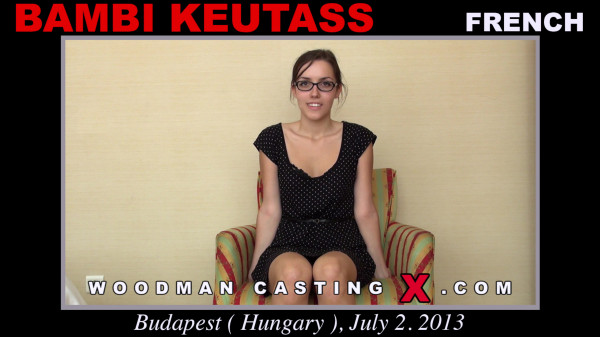
Visit Woodman Casting X and watch this scene!
### Part 1: From Sketchbook to Screen — Bambi Keutass Enters the Frame
Casting days have a rhythm of their own, and on July 2, 2013, Budapest hummed with that familiar tempo. For a movie and cartoons blog, it’s tempting to describe this moment as the first pencil stroke on a blank page. Bambi Keutass arrived early, her posture calm but eyes alert, as if she were a character waiting to be inked into a panel.
Pierre Woodman greeted her with a director’s economy of words.
“Bonjour, Bambi. Comfortable?”
She smiled. “A little nervous, but yes. Nervous can be good, right?”
He nodded. “Nervous is movement. Movement is life on screen.”
Their exchange had the simplicity of animated dialogue bubbles—short, expressive, and revealing. Pierre asked about her background, her work as a model, and her reasons for stepping into film.
“I like stories,” Bambi said. “Even still images tell stories. Film just lets them move.”
“That’s a good answer,” Pierre replied. “In cartoons, movement exaggerates truth. In cinema, we search for it.”
The room itself was bare: a chair, a camera, neutral walls. Like a cartoon background, it was designed not to distract from the character. Bambi took her seat, adjusted her posture, and waited for direction.
“Imagine this is not an audition,” Pierre said. “Imagine it’s the first frame of a longer story.”
She laughed softly. “Then I suppose I should introduce myself properly.”
“Go ahead,” he encouraged.
Her introduction was simple, honest, and expressive. Each gesture felt slightly amplified, like a character animated at twelve frames per second instead of twenty-four—deliberate, readable, memorable.
### Part 2: Dialogue as Animation — The Casting Conversation Unfolds
As the casting progressed, the conversation between actress and director became the centerpiece. For fans of cartoons, this was the equivalent of voice actors finding their characters through banter.
“Tell me,” Pierre asked, leaning back, “what kind of roles do you imagine yourself in?”
Bambi paused. “Ones where I can change. Where the audience doesn’t quite know me at first.”
“So, a transformation arc,” he said with a grin. “Every good cartoon has one.”
They talked about confidence, vulnerability, and performance. Pierre often spoke in metaphors, sketching ideas in the air with his hands.
“Think of the camera as an eye,” he said. “A curious eye, not a judging one.”
Bambi responded, “Then I won’t hide. Eyes see everything anyway.”
“Exactly,” Pierre replied. “Honesty reads well on screen.”
At one point, he asked her to stand, turn, and speak directly to the camera.
“Say anything,” he instructed.
She looked into the lens. “Hello. This is me. No filters.”
He stopped her gently. “Again, but slower. Like an animated close-up.”
She tried again, pacing her words, letting silence become part of the performance.
Pierre smiled. “You understand timing. That’s rare.”
Their dialogue continued, bouncing like call-and-response in a cartoon script.
“Do you take direction easily?”
“I like direction,” she said. “It’s like having a map.”
“And if the map changes?”
“Then the adventure gets interesting.”
For a cartoons blog, it’s worth noting how casting sessions mirror animation tables: ideas are tested, redrawn, refined. Pierre wasn’t just looking at how Bambi looked on camera, but how she listened, adapted, and played within the frame.
“Acting is reacting,” he told her.
Bambi nodded. “Then I’m ready to react.”
### Part 3: Final Frames — A Casting that Feels Like a Pilot Episode
As the session drew to a close, there was a sense of completion, like finishing the first episode of a series. Pierre set the camera down and spoke more casually.
“You did well today,” he said.
“Thank you,” Bambi replied. “It felt… different than I expected.”
“In a good way?”
“Yes. Like I learned something about myself.”
They discussed Budapest, travel, and creative growth. Pierre shared a thought that resonated strongly with the cartoon analogy.
“Characters don’t exist until someone believes in them,” he said. “Today, you believed in yours.”
Bambi smiled. “And you believed in me.”
He nodded. “That’s how casting works.”
Before she left, he offered one final piece of direction—less about film, more about mindset.
“Stay curious,” he said. “Curiosity keeps performances alive.”
“I will,” she answered. “I like being curious. It keeps things colorful.”
In retrospect, Bambi Keutass’ casting on that July day feels like a pilot episode that promises more seasons to come. For readers who love both movies and cartoons, this moment captures the shared DNA of the two worlds: bold characters, clear emotions, and the magic that happens when dialogue brings drawings—or dreams—to life.
As Bambi stepped back into the Budapest sun, the storyboard had been approved. The character was cast. And somewhere between cinema and animation, a new story had officially begun.
Download complete video at Woodman Casting X