Stella Leroy in “A DP for a Glass of Water” – Pierre Woodman’s Chaotic and Unexpected Studio Session
Written by PornGPT
In one of the most unusual behind-the-scenes productions of the year, French newcomer Stella Leroy steps into Pierre Woodman’s demanding universe for a tense, unpredictable, and surprisingly humorous studio experience. “A DP for a Glass of Water” mixes pressure, improvisation, backstage arguments, and moments of vulnerability into a production that feels closer to a documentary than a scripted feature. Supported by Alex Romero and Emmanuel Torquemada, Stella navigates a filming day full of nervous laughter, difficult decisions, and endless conversations with the legendary French director.
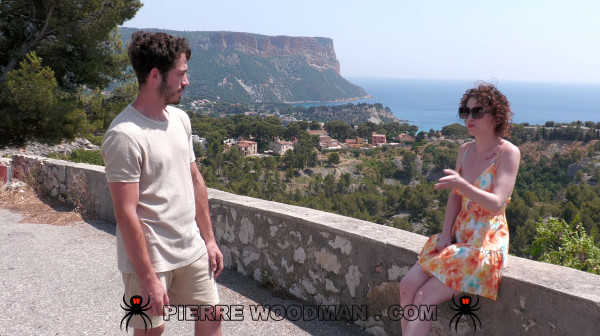
Visit Woodman Casting X and watch this scene!
Stella Leroy’s Nervous Arrival Changes the Mood of the Entire Studio
From the opening minutes, the atmosphere inside the Budapest studio feels completely different from the polished glamour many viewers expect from a Pierre Woodman production. Stella Leroy arrives wearing oversized sunglasses, carrying a bottle of sparkling water, and looking visibly nervous even before the cameras officially begin rolling.
Pierre Woodman immediately notices her hesitation.
“Why are you hiding your eyes?” he asks while checking the lighting setup.
“I didn’t sleep much,” Stella replies quietly.
“You are not the first actress arriving tired on my set.”
“I know… but I think I’m more stressed than tired.”
That exchange alone establishes the tone for the entire production. Instead of rushing directly into filming, Woodman spends nearly twenty minutes simply talking to Stella while crew members continue preparing equipment in the background.
Alex Romero, already dressed and waiting near the monitor station, laughs softly.
“She looks like she wants to escape.”
“I am thinking about it,” Stella jokes nervously.
Woodman turns toward her immediately.
“No escaping. If you leave now, Emmanuel will drink all your water.”
Emmanuel Torquemada, sitting quietly on a black leather sofa, raises his plastic cup.
“Already finished mine.”
The entire room bursts into laughter, and for the first time Stella visibly relaxes.
What makes this production particularly interesting is how much time is dedicated to conversation rather than performance. Woodman constantly pushes Stella to speak openly about her fears, her motivations, and her expectations.
“Why did you want to shoot with me?” he asks.
“Because everyone says your productions are intense.”
“And you like intense?”
“I thought I did.”
“That sounds like regret already.”
“No,” she says with a smile. “Just reality.”
The chemistry between director and actress becomes the true centerpiece of the movie. Woodman alternates between supportive mentor and demanding perfectionist every few minutes, creating an emotional rhythm that keeps the viewer engaged throughout the entire feature.
At one point Stella sits alone near the makeup mirror while the lighting crew adjusts the set. Woodman approaches her again.
“You are too quiet.”
“I’m concentrating.”
“Bad idea.”
“Why?”
“People who concentrate too much become scared.”
“And people who don’t concentrate?”
“They work for me.”
Again, laughter spreads across the room.
The title “A DP for a Glass of Water” becomes an ongoing joke throughout the production. Every time Stella asks for a short break or another bottle of water, Woodman theatrically reminds her of the movie title.
“You see?” he says dramatically. “This is becoming expensive.”
“It’s only water!”
“Today yes. Tomorrow champagne.”
Alex Romero adds another joke from behind the camera monitor.
“If she asks for coffee, the budget is finished.”
The relaxed banter between performers gives the movie an unusually authentic atmosphere. Instead of trying to appear glamorous or overly scripted, everyone seems aware that the most entertaining moments are happening naturally between setups.
And that authenticity becomes the production’s greatest strength.
Pierre Woodman Pushes Stella Leroy Beyond Her Comfort Zone
The middle section of the movie becomes considerably more intense once filming properly begins. Woodman’s directing style turns sharper, more demanding, and occasionally confrontational as he pushes Stella Leroy to project more confidence on camera.
“You are thinking too much again,” he tells her after stopping a scene.
“I’m trying to understand what you want.”
“I want honesty.”
“That’s vague.”
“No. Honesty is the easiest thing in the world. Acting is difficult.”
This philosophical back-and-forth continues throughout the production and often feels more compelling than the actual scenes being filmed. Stella repeatedly challenges Woodman’s instructions instead of silently following them, creating genuine tension inside the studio.
At one point she crosses her arms and stares directly at him.
“You enjoy making actresses nervous.”
Woodman smiles immediately.
“No. I enjoy watching nervous actresses become confident.”
“That sounds like manipulation.”
“That sounds like directing.”
Emmanuel Torquemada, who remains mostly calm and observant during the production, occasionally interrupts with dry humor that completely resets the mood.
“You two sound married already,” he comments during a break.
“Impossible,” Stella replies quickly. “I would win every argument.”
Woodman shakes his head dramatically.
“No chance. I am French.”
The film constantly balances pressure with comedy, which prevents the atmosphere from becoming too heavy. Even during difficult moments, there is always someone making a joke or breaking the tension with an unexpected comment.
Alex Romero especially stands out as a stabilizing presence on set. While Woodman creates chaos and Stella reacts emotionally, Alex often plays the role of mediator.
“She’s doing fine,” he tells the director during one particularly stressful setup.
“I know she’s doing fine,” Woodman answers. “I want exceptional.”
Stella overhears the conversation.
“You know normal humans need oxygen, right?”
“Exceptional humans need pressure,” Woodman replies instantly.
One of the strongest sequences happens halfway through the production when Stella temporarily walks away from the set after becoming frustrated with repeated retakes. Instead of following her immediately, Woodman waits several minutes before joining her near the hallway outside the studio.
The cameras continue recording.
“You are angry?” he asks calmly.
“A little.”
“Good.”
“Why good?”
“Because now you stop pretending.”
Stella leans against the wall holding another bottle of water.
“You always speak like this?”
“Yes.”
“It must be exhausting.”
“It is.”
That quiet conversation becomes one of the movie’s emotional highlights. For several minutes the loud studio atmosphere disappears completely, replaced by a surprisingly sincere exchange between director and actress.
Woodman eventually softens his tone.
“Listen… you don’t need to become somebody else for the camera.”
“Then why does it feel like I do?”
“Because cameras are cruel.”
“And you?”
“I am worse than the camera.”
Despite the constant pressure, Stella gradually becomes more confident as filming progresses. Her body language changes, her responses become quicker, and she begins teasing Woodman as aggressively as he teases her.
During one setup she suddenly points toward the director’s coffee cup.
“You had three coffees already.”
“I am working.”
“So am I.”
“You want coffee now too?”
“No,” she says with a grin. “I want a raise.”
Even crew members behind the camera begin laughing.
By this stage the production no longer feels like a standard studio shoot. It resembles an improvised psychological duel mixed with backstage comedy, and that unpredictability keeps every scene entertaining.
A Surprisingly Human Finale Gives the Movie Its Real Identity
The final section of “A DP for a Glass of Water” abandons nearly all pretense of traditional filmmaking and becomes almost entirely focused on the relationships formed during the chaotic day of shooting.
By now Stella Leroy appears transformed compared to the nervous woman introduced at the beginning of the movie. She jokes with crew members, interrupts Woodman constantly, and even starts mocking the dramatic seriousness of the production itself.
“This movie should be renamed,” she says while reviewing footage on the monitor.
“To what?” asks Alex Romero.
“Pierre Woodman Needs Therapy.”
Woodman pretends to be offended.
“This is art.”
“This is confusion,” Stella replies.
One particularly memorable sequence happens late at night after the official filming is supposedly finished. The crew begins disconnecting lights while Stella sits on the edge of the set eating snacks and talking casually with Emmanuel Torquemada.
“You survived,” Emmanuel tells her.
“Barely.”
“You cried only once.”
“Twice,” she corrects him.
Woodman overhears this while walking past.
“Three times.”
“That last one doesn’t count!”
“It absolutely counts.”
The exhausted but playful atmosphere during these final moments gives the movie an authenticity rarely seen in productions of this type. Nobody appears to be performing anymore. The barriers between actors, director, and crew slowly disappear.
Stella eventually turns serious for one of the last conversations in the film.
“Can I ask you something honestly?” she says to Woodman.
“You can always ask.”
“Why do you keep doing this after so many years?”
Woodman pauses longer than expected before answering.
“Because every new person changes the story.”
“That’s your deep philosophical answer?”
“No,” he says. “The real answer is I’m terrible at retirement.”
The entire set erupts into laughter again.
Even the technical crew becomes part of the movie’s identity by the ending. Camera operators speak from behind the lens, assistants joke about overtime, and someone accidentally drops a metal stand during a serious discussion, instantly ruining the dramatic mood.
“Perfect ending,” Stella says sarcastically.
“That is cinema,” Woodman replies proudly.
The closing moments are surprisingly quiet. Stella sits alone on the now-empty set holding the same bottle of sparkling water she carried into the studio hours earlier.
Woodman walks into frame one final time.
“So… worth the glass of water?”
She looks around the empty studio and smiles tiredly.
“Ask me tomorrow.”
That final exchange perfectly summarizes the spirit of the entire production. “A DP for a Glass of Water” succeeds not because of spectacle or controversy, but because it captures something far more interesting: the strange mixture of exhaustion, humor, insecurity, ego, and human connection that exists behind the scenes of filmmaking.
Stella Leroy delivers a believable and charismatic performance as a newcomer struggling to balance fear with ambition, while Alex Romero and Emmanuel Torquemada provide strong supporting energy throughout the production. But the real driving force remains Pierre Woodman himself, whose chaotic directing style transforms ordinary studio moments into memorable cinematic exchanges.
For viewers interested in backstage tension, spontaneous dialogue, and raw studio atmosphere, this fictional production offers a surprisingly entertaining experience that feels authentic from beginning to end.
Download complete video at Woodman Casting X