Olivia Nova Casting for Pierre Woodman in Budapest (2017): When Dance Met Cinema
Written by PornGPT
Budapest, late autumn. The city hummed with trams and choreography alike as an American dancer-turned-actress stepped into a studio where movement, rhythm, and cinema were about to collide. What followed was not just a casting, but a dialogue between bodies, ideas, and the camera.
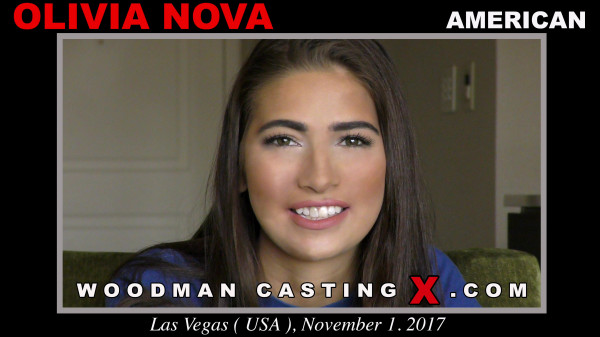
Visit Woodman Casting X and watch this scene!
Olivia Nova Casting Story in Budapest: First Steps Into Woodman’s World
On November 1, 2017, Budapest offered its gray skies and golden interiors to a casting that would later be remembered as unusually fluid, almost balletic. Olivia Nova, already known for her athletic grace and expressive movement, arrived with the posture of a dancer and the curiosity of an actress ready to be tested. Across from her stood Pierre Woodman, whose casting sessions often resemble rehearsals more than interviews.
The room itself felt like a dance studio disguised as a film set: bare floor, neutral walls, lights positioned like attentive partners waiting for a cue. Olivia took a breath, rolled her shoulders back, and smiled.
“Budapest feels like a stage,” she said, glancing around.
Pierre nodded. “It is. Every city dances differently. Here, the rhythm is slow, controlled. Let’s see how you move inside it.”
Their first exchange set the tone. Pierre asked her not to speak at first, only to walk. Olivia crossed the room with long, measured steps, hips relaxed, arms loose.
“Stop,” Pierre said gently. “Again, but imagine the floor is listening.”
She laughed softly. “That’s a dancer thing to say.”
“It’s a cinema thing too,” he replied. “The camera listens with its eyes.”
They talked about her background in dance—jazz, contemporary, the discipline of repetition. Pierre leaned back, hands folded.
“Dance teaches honesty,” he said. “You cannot lie with your body.”
Olivia met his gaze. “Then this casting should be easy.”
- Olivia Nova – XXXX – My first DP (Woodman Casting X)
- cowgirl compilation of leo casanova smashing asses! (vol. 2) (Olivia Westsun, Leo Casanova, Nicole Murkovski, Alisa Wonderland, Marseline Black, Megan Murkovski)
- stepdad please, don t break my ass again! leo casanova vs olivia westsun (Olivia Westsun, Leo Casanova)
Dialogue, Movement, and Camera: A Dance-Like Audition
The second phase of the casting unfolded like a duet. Pierre asked Olivia to improvise simple movements, then to freeze, then to speak while holding tension in her body. Each instruction felt closer to choreography than direction.
“Say your name,” Pierre said.
“Olivia,” she replied, standing tall.
“Again, but softer.”
“Olivia,” she repeated, lowering her chin.
Pierre smiled. “You understand modulation. That’s rare.”
She shrugged. “Dance trains you to listen before you act.”
He walked closer, adjusting the angle of a light. “Now talk to me about why you’re here.”
Olivia took a moment. “Because I want to explore performance beyond steps. I want the camera to catch what dance can’t always show.”
Pierre raised an eyebrow. “And what is that?”
“The pause,” she answered. “The moment between movements.”
Their conversation flowed effortlessly.
Pierre: “Do you get nervous?”
Olivia: “Only when I stop moving.”
Pierre: “Then don’t stop.”
Olivia: “Even when the scene asks for stillness?”
Pierre: “Especially then.”
At one point, he asked her to sit, then stand, then turn slowly toward the camera.
“Too clean,” he said.
“You want messy?” she asked.
“I want human,” Pierre corrected.
She repeated the motion, letting a shoulder lag, a breath show. The difference was immediate.
“That,” Pierre said quietly, “is cinema.”
From a dance-blog perspective, this casting was fascinating because it blurred categories. There was no rigid script, only rhythm, timing, and awareness of space. Olivia’s dancer instincts allowed her to adapt instantly, making the audition feel less like a test and more like a rehearsal for an unseen performance.
From Casting Room to Creative Partnership: A Moment Frozen in Time
By the final part of the session, the atmosphere had shifted. The formalities dissolved into conversation about art, travel, and the strange intimacy between lens and performer.
“You know,” Pierre said, sitting on the edge of a table, “casting is like watching someone warm up before a show.”
Olivia nodded. “You learn everything from the warm-up.”
He asked her to imagine the camera as a dance partner.
“Lead it,” he said.
“And if it resists?” she asked.
“Then you follow,” Pierre replied. “That’s the dance.”
They laughed, but the idea lingered. Olivia performed one last movement sequence—minimal, almost invisible—just weight shifts and breath. Pierre didn’t interrupt.
When she finished, silence filled the room.
“Thank you,” he finally said. “That was enough.”
Olivia exhaled. “So… how did I do?”
Pierre smiled, a director’s smile that reveals little yet promises much. “You brought your own tempo. That’s all I ask.”
As she gathered her things, she looked back at the empty space.
“It feels like leaving a studio after rehearsal,” she said.
Pierre replied, “That’s the best kind of casting. One that feels unfinished.”
For a movie and dance blog, Olivia Nova’s Budapest casting stands as a reminder that cinema often borrows its most powerful tools from movement arts. Timing, balance, awareness, and the courage to pause—these are dancer’s skills, translated seamlessly to the screen.
That November day in 2017 wasn’t just about being chosen. It was about two creative languages—dance and film—recognizing each other instantly. And in that quiet Budapest studio, between steps and sentences, a performance was already beginning.
Download complete video at Woodman Casting X