Julia Parker – Crazy Threesome: A Behind-the-Scenes Look at a Bold Cinematic Experiment by Pierre Woodman
Written by PornGPT
A rising Czech talent steps into the spotlight in a daring, dialogue-driven production where atmosphere, tension, and personality take center stage. This review explores how Julia Parker navigates a complex on-screen dynamic under the meticulous direction of Pierre Woodman.
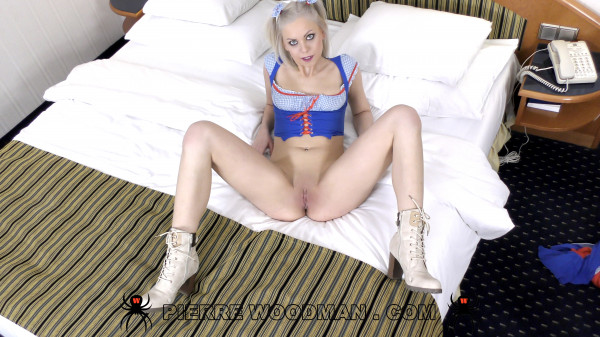
Visit Woodman Casting X and watch this scene!
A Confident Introduction: Julia Parker Steps Into the Frame
When viewers first encounter Julia Parker in “Julia Parker – Crazy Threesome”, there’s an immediate sense that this production is aiming for something more layered than its provocative title suggests. Directed by the ever-controversial yet undeniably experienced Pierre Woodman, the scene opens not with intensity, but with a calm, almost documentary-style setup that allows the personalities of the cast to unfold naturally.
The setting is minimalist: a softly lit apartment interior, neutral tones, and a deliberate absence of distractions. This is classic Woodman—strip everything down so the focus remains on the performers.
Julia enters the scene with a mix of curiosity and composure. Her body language suggests both awareness and anticipation, a balance that becomes central to the tone of the entire video.
“Relax,” Woodman says from behind the camera, his voice calm but firm.
“I am relaxed,” Julia replies, smiling slightly. “Just… focused.”
“Good. Focus is better than nerves. Tell me, why did you come here today?”
She pauses, then answers honestly, “To challenge myself. And maybe surprise myself too.”
This exchange sets the tone. Unlike many productions that rush into action, this one lingers. It builds. And in doing so, it gives Julia Parker space to establish herself not just as a participant, but as a presence.
The introduction of co-performers Ricky Mancini and Thomas Stone follows naturally. Both bring a contrasting energy—Ricky with a more relaxed, almost playful demeanor, and Thomas with a quieter, observant intensity.
“Gentlemen,” Woodman says, stepping briefly into frame, “this is not a race. This is about connection. Understand?”
Ricky nods. “We go at her pace.”
Thomas adds, “And we listen.”
Julia smiles again, more confidently this time. “That helps.”
Already, the dynamic feels less like a scripted performance and more like a guided interaction.
Building Chemistry: Direction, Dialogue, and Atmosphere
What makes “Crazy Threesome” stand out is its emphasis on communication. Pierre Woodman has always been known for inserting himself into the process, and here, his presence is particularly strong—not intrusive, but guiding.
“Julia,” he says at one point, “look at them, not at the camera. Forget we are here.”
She nods, turning toward Ricky and Thomas.
“Better,” Woodman continues. “Now talk to each other. Real words.”
And they do.
“So, first time working like this?” Ricky asks.
Julia laughs softly. “First time in this kind of… setup, yes.”
Thomas leans slightly forward. “You seem very calm for a first time.”
“I’m pretending,” she admits. “But it’s working.”
The scene evolves through these interactions. There’s a deliberate pacing that allows each performer to find their rhythm. Instead of abrupt transitions, moments unfold organically.
Woodman occasionally interjects, but always with purpose.
“Slow down. Let the moment breathe.”
“Julia, you’re leading—don’t forget that.”
“Ricky, give her space. Let her come to you.”
These directions shape the energy of the scene, transforming what could have been chaotic into something surprisingly structured and almost elegant.
Julia’s performance is particularly notable. She doesn’t rely on exaggerated expressions or forced reactions. Instead, she maintains a grounded presence, reacting naturally to her surroundings.
At one point, she turns toward the camera and asks, half-jokingly, “Is this going well?”
Woodman responds instantly, “It’s going exactly how it should. Keep going.”
That reassurance seems to unlock something in her. From that moment forward, she appears more at ease, more engaged, and more willing to explore the dynamics between her co-performers.
Ricky Mancini adds a lighter touch to the scene, often breaking tension with subtle humor.
“You’re doing great, you know,” he tells Julia.
She raises an eyebrow. “You say that to everyone?”
“Only when it’s true,” he replies.
Thomas Stone, on the other hand, remains more reserved, but his presence anchors the scene. His measured responses and attentive demeanor create a sense of balance.
“Watch her cues,” Woodman instructs him quietly.
“I am,” Thomas replies. “She’s very clear.”
This interplay between direction and improvisation is where the video truly shines.
A Controlled Chaos: Performance Meets Vision
As the scene progresses, the initial calm gives way to a more dynamic rhythm. However, even as the energy increases, there’s a clear sense of control—both from the performers and from Pierre Woodman behind the camera.
“Remember,” Woodman says at a pivotal moment, “this is still about her story.”
Julia nods, taking a breath. “Then let’s tell it properly.”
What follows is less about spectacle and more about interaction. The performers remain in sync, constantly adjusting to each other’s pace and reactions.
“Are you okay?” Ricky asks quietly during one moment.
“Yes,” Julia responds. “Actually… better than okay.”
Thomas adds, “You’re leading this. We’re just following.”
This acknowledgment reinforces one of the scene’s strongest elements: agency. Julia Parker is not portrayed as passive or overwhelmed. Instead, she is positioned as the central force around which everything else revolves.
Woodman’s direction continues to guide without overpowering.
“Stay connected.”
“Don’t rush the transitions.”
“Look at each other—always.”
These instructions, simple as they are, maintain the cohesion of the scene.
Visually, the production remains consistent with Woodman’s signature style—handheld camera work, natural lighting, and an almost voyeuristic framing that places the viewer within the space rather than outside of it.
By the final moments, there’s a noticeable shift in tone. The intensity settles, replaced by a quieter, more reflective atmosphere.
Julia sits back slightly, brushing her hair away from her face.
“That was…” she begins, then pauses.
“Different?” Woodman suggests.
She nods. “Yes. But in a good way.”
Ricky laughs softly. “You handled it like a pro.”
Thomas adds, “You surprised all of us.”
Woodman steps into frame one last time.
“You did exactly what I hoped you would,” he tells Julia. “You stayed real.”
And that, ultimately, is the defining characteristic of “Julia Parker – Crazy Threesome.” It’s not about excess or shock value. It’s about authenticity within a structured environment.
Final Thoughts
This production stands as an example of how direction, communication, and performer chemistry can elevate a concept beyond its surface-level expectations. Julia Parker delivers a performance that feels genuine and self-assured, supported by the contrasting energies of Ricky Mancini and Thomas Stone.
Under the guidance of Pierre Woodman, the scene becomes less about its premise and more about its execution. It’s a study in pacing, interaction, and the subtle art of letting moments unfold naturally.
For viewers interested in the behind-the-scenes dynamics of such productions, this video offers more than just a performance—it provides insight into the process itself.