Cassie Fire Casting with Pierre Woodman in Budapest – June 20, 2016: A Russian Actress’s First Impression
Written by PornGPT
On June 20, 2016, Russian actress Cassie Fire arrived in Budapest for a casting session with French director Pierre Woodman. What followed was a memorable encounter filled with curiosity, candid conversations, nervous laughter, and the unpredictable atmosphere of an international film audition. This behind-the-scenes retrospective explores Cassie’s personality, her interaction with the director, and the professional challenges of stepping in front of the camera.
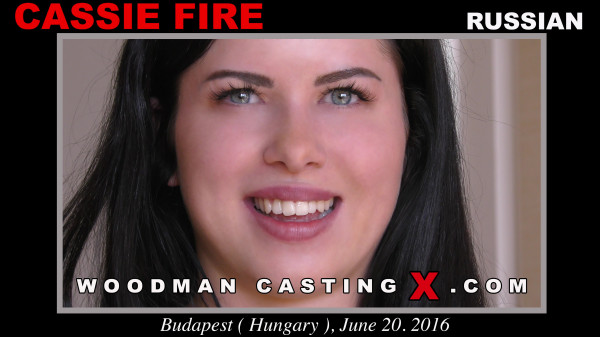

Visit Woodman Casting X and watch this scene!
Cassie Fire Meets Pierre Woodman in Budapest: The Beginning of a 2016 Casting Session
Budapest, June 20, 2016. The Hungarian capital was enjoying the warmth of early summer, and the city had already established itself as an important European destination for international film production. Behind the elegant facades and busy streets, studios and independent production teams were preparing for another day of auditions, interviews, and camera tests.
Among the day’s visitors was Cassie Fire, a Russian actress preparing to meet French director Pierre Woodman.
The following reconstruction imagines the conversations and atmosphere surrounding their meeting, rather than presenting an authenticated transcript.
Cassie arrived carrying a small handbag, dressed casually but with a carefully considered appearance. She had the unmistakable expression of someone trying to balance excitement with the uncertainty of a new professional opportunity.
Pierre welcomed her with a smile.
“Hello! You must be Cassie.”
“Yes, that’s me. Hello, Pierre!”
“Welcome to Budapest. Was it difficult to find the studio?”
“Not really. The taxi driver knew the street, but I was a little worried about being late.”
“You’re perfectly on time. That’s already a good beginning.”
Cassie laughed.
“So I passed the first test?”
“Absolutely. But don’t worry, there isn’t an examination waiting for you.”
“Good, because I didn’t study!”
Their laughter helped establish a relaxed atmosphere.
Pierre invited her to sit opposite the camera, where the lighting had already been adjusted. A member of the production team checked the recording equipment while Cassie looked around with curiosity.
“Have you been to Budapest before?” Pierre asked.
“No, this is my first proper visit.”
“And what do you think?”
“I haven’t seen enough yet. Mostly the airport, the road, and this room.”
“Then you need to explore the city after we’re finished.”
“I would love that. People told me Budapest is beautiful at night.”
“It certainly is. But first, tell me a little about yourself.”
Cassie straightened in her chair.
“What would you like to know?”
“Let’s start with something simple. Where are you from?”
“Russia.”
“And what brought you into modeling and film work?”
“I’ve always liked photography. When I was younger, I enjoyed dressing up, posing, and imagining different characters. Eventually, I became curious about working with professional cameras.”
“Was your family supportive?”
“They were surprised at first. I think they expected me to choose something more ordinary.”
“What did you want to become when you were a child?”
Cassie thought for a moment.
“Maybe a singer. Or an actress in big movies.”
“Those are ambitious dreams.”
“I still like ambitious dreams.”
Pierre smiled.
“That’s a good attitude.”
The opening conversation had an easy rhythm. Cassie was occasionally shy, but she answered questions with humor and showed a willingness to engage with the director.
The atmosphere recalled the conversational approach associated with Woodman’s earlier casting sessions, including the March 2014 Budapest audition featuring Brazilian performer Susana Melo. Both stories illustrate how a camera interview can become a study of personality as much as a professional introduction.
For Cassie, the first minutes were particularly important. She was learning how the director communicated, how the production operated, and how much of her own personality she wanted to reveal.
“Are you nervous?” Pierre eventually asked.
“A little.”
“Why?”
“Because I don’t know exactly what you expect.”
“I expect you to be yourself. We can discuss everything else.”
“That’s easy to say when you’re the one asking the questions!”
Pierre laughed.
“Fair enough. Maybe I should let you interview me.”
Cassie leaned forward.
“All right. Why did you become a director?”
“Because I was interested in people, images, and stories.”
“That’s a very diplomatic answer.”
“And you’re a very demanding interviewer!”
By this point, Cassie seemed noticeably more comfortable. The initial tension had given way to curiosity, and the casting was ready to move into its next phase.
Cassie Fire’s Budapest Audition: Camera Confidence, Personality, and Career Ambitions
With the introductions complete, the conversation shifted toward Cassie’s experience in front of the camera and her expectations of working in the adult entertainment industry.
The transition was gradual. Pierre wanted to understand how Cassie reacted to direction, while Cassie seemed interested in learning what distinguished a professional production from an ordinary photo session.
“Have you done many professional shoots?” Pierre asked.
“Some photography, yes. But every photographer works differently.”
“What makes a good photographer, in your opinion?”
“Someone who explains what they want without making you feel stupid.”
“That’s a very reasonable answer.”
“And someone who knows when to stop talking!”
Pierre raised his eyebrows.
“Are you telling me I talk too much?”
“Not yet. But the interview is still young.”
The director laughed, appreciating the quick response.
Cassie’s humor became one of the defining characteristics of the imagined encounter. Instead of presenting herself as someone who knew everything about the business, she was willing to admit uncertainty and ask questions.
Pierre adjusted the camera slightly.
“Can you look directly into the lens?”
“Like this?”
“Exactly. Now imagine you’re speaking to someone watching the interview.”
“Should I introduce myself again?”
“Yes, please.”
Cassie looked toward the camera.
“Hello, everybody. I’m Cassie, I’m from Russia, and today I’m in Budapest.”
“Very good,” Pierre said. “Anything else?”
“I’m trying not to laugh because Pierre is looking at me very seriously.”
“That’s my professional expression.”
“It’s frightening!”
“Then I’ll have to change it.”
Cassie smiled broadly.
The exchange illustrated a useful quality in a screen performer: the ability to respond spontaneously without losing awareness of the camera.
For casting directors, personality can be just as significant as appearance. An expressive face, natural conversational rhythm, and confidence under observation all contribute to the impression a performer makes.
Pierre continued with questions about her ambitions.
“Where would you like your career to go?”
“I want to travel, meet interesting people, and become better at what I do.”
“Do you see yourself working internationally?”
“Yes. I think working in different countries teaches you a lot.”
“Even when you don’t speak the language?”
“Especially then. You learn to communicate in other ways.”
“How is your English?”
“Good enough to argue with you.”
“That’s already excellent.”
“And my French is terrible.”
“Then I’ll teach you something.”
“Something useful, please.”
“Bonjour.”
“I already know that!”
“Then you’re ahead of schedule.”
The conversation eventually turned to the practical realities of professional production.
Pierre described how scheduling, agreements, camera arrangements, and expectations needed to be discussed before any assignment.
Cassie listened carefully.
“So everything is decided before filming?” she asked.
“That’s the objective. Everyone should understand the assignment.”
“And if somebody changes their mind?”
“Then the situation needs to be discussed. Nobody should feel unable to speak.”
“I think that’s important.”
“Of course.”
Cassie nodded thoughtfully.
For an actress entering an unfamiliar professional environment, understanding the production process could be as important as performing well during the audition itself.
The conversation then returned to lighter subjects.
“Do you like music?” Pierre asked.
“Very much.”
“What kind?”
“Almost everything. It depends on my mood.”
“Russian music?”
“Of course. But I like international music too.”
“Could you dance for a music video?”
“Maybe. But you would need a very patient choreographer.”
“Why?”
“Because I always want to improvise.”
“Improvisation can be useful.”
“Then perhaps I’m already qualified.”
The session’s playful atmosphere provides an interesting comparison with Woodman’s earlier Budapest casting featuring Russian actress Lana Rey in February 2016, another entry in the director’s extensive catalog of international auditions.
By the middle of the interview, Cassie’s initial nervousness had become less apparent. Her answers were longer, her gestures more expressive, and her questions increasingly direct.
“Pierre, can I ask something?”
“Certainly.”
“How do you decide whether someone is right for a production?”
“Experience helps, but every person is different. I look at how someone communicates, whether they understand the work, and whether the project makes sense for them.”
“So there’s no magic formula?”
“Unfortunately not.”
“That’s disappointing. I was hoping you had a secret.”
“If I had one, I wouldn’t reveal it during an interview.”
“Then perhaps I’ll discover it myself.”
The discussion also touched on the importance of separating a performer’s public image from their private personality.
Cassie considered the question before answering.
“I think people sometimes imagine they know someone because they’ve seen photographs or videos.”
“And do they?”
“Not necessarily. A photograph shows one moment. A person is much more complicated.”
“That’s a thoughtful answer.”
“Thank you. I have serious moments too.”
“I was beginning to wonder.”
“Be careful, Pierre!”
Their laughter once again relaxed the atmosphere.
The camera continued recording as the conversation moved toward the final stage of the audition.
Cassie Fire and Pierre Woodman: The Final Moments and Legacy of the June 20, 2016 Casting
As the session approached its conclusion, the atmosphere had become noticeably different from the opening minutes.
Cassie no longer appeared preoccupied with making a perfect first impression. Instead, she seemed comfortable participating in a conversation that alternated between professional questions, spontaneous jokes, and reflections on the entertainment industry.
Pierre returned to a question he had introduced earlier.
“Now that you’ve spent some time here, are you still nervous?”
“Much less.”
“What changed?”
“I realized I could talk normally.”
“Did you expect something different?”
“I didn’t know what to expect. That’s always the difficult part.”
“And what will you remember about today?”
Cassie paused.
“Probably the questions. And the fact that you made me laugh when I was trying to be serious.”
“That’s not necessarily a bad thing.”
“No. I think it’s better than sitting here like a statue.”
Pierre agreed.
“A camera records more than appearance. It also records personality.”
“Then I hope mine behaves.”
“So far, it’s doing very well.”
The final portion of the imagined interview focused on Cassie’s plans after leaving the studio.
“Are you staying in Budapest for a few days?” Pierre asked.
“I hope so. I’d like to see more of the city.”
“Do you have anything planned?”
“Maybe walking along the river, visiting the center, and finding somewhere nice to eat.”
“Do you enjoy Hungarian food?”
“I haven’t tried enough to decide.”
“Then you have another assignment.”
“Is this part of the casting?”
“No, this one is entirely optional.”
“Good. Because I’m definitely accepting it.”
The director smiled and checked the camera display.
“Before we finish, is there anything you would like to say?”
“To you or to the audience?”
“Either.”
Cassie considered the question.
“I think people should be brave enough to try something new, but also smart enough to ask questions.”
“That’s good advice.”
“And they should travel more.”
“Anything else?”
“Yes. They should visit Budapest when the weather is beautiful.”
“Now you’re working for the Hungarian tourism office.”
“Maybe that’s my next career!”
The exchange ended with laughter.
From a production perspective, the session offered an opportunity to introduce Cassie Fire to viewers interested in the personalities behind international adult entertainment. Rather than treating the casting simply as a formal audition, this retrospective emphasizes the human elements of the encounter: unfamiliar surroundings, communication across languages, and the challenge of presenting oneself confidently.
The actual casting is listed in the Woodman Casting X episode catalog as having been recorded in Budapest on June 20, 2016, with an episode release dated July 2, 2016.

That distinction matters when placing the encounter within the production’s history.
Another interesting detail emerged later that year. In a December 2016 forum discussion, Woodman stated that he had suggested the stage name Cassie Fire after being impressed during her casting, rather than retaining the name Cassie Right that her agency had reportedly proposed.
This gives the audition an additional place in the story of how the actress’s professional identity developed.
The name itself has a memorable quality. Short, energetic, and easy to recognize, Cassie Fire sounds designed for an international audience. Whether seen on a casting page, a promotional photograph, or a production listing, it immediately establishes a distinctive identity.
In the reconstructed closing conversation, Cassie asked one final question.
“Pierre, do you think people will remember me?”
“That’s difficult to predict.”
“Why?”
“Because audiences remember different things. Sometimes it’s an appearance, sometimes a personality, sometimes just a particular moment.”
“And what do you think they’ll remember about me?”
Pierre smiled.
“Perhaps your sense of humor.”
“Only that?”
“And your confidence.”
“That’s better.”
“Is that enough?”
“For today, yes.”
Cassie stood up, collected her handbag, and thanked the production team.
“Thank you for welcoming me.”
“Thank you for coming, Cassie.”
“I hope I wasn’t too difficult.”
“Not at all.”
“Then next time I’ll try harder!”
“Please don’t.”
They laughed one final time.
For viewers exploring the Woodman casting archives, Cassie Fire’s June 2016 Budapest appearance belongs to a period when international performers regularly traveled to Hungary to pursue opportunities in the European adult film industry.
The historical interest of these recordings extends beyond their original commercial purpose. They also document the personalities, ambitions, languages, and professional environments of performers working in a highly international sector.
Cassie’s story is particularly memorable because of the stage-name anecdote and her subsequent presence in Woodman’s production catalog.
Ultimately, the June 20, 2016 casting represents an early chapter in Cassie Fire’s screen career and a recognizable entry in the long-running Woodman Casting X series. In this behind-the-scenes interpretation, the most engaging moments are not elaborate performances or dramatic revelations, but the smaller exchanges that make a screen personality recognizable: a quick joke, an unexpected answer, a thoughtful question, or a smile at precisely the right moment.
And perhaps that is the lasting appeal of revisiting a casting interview years later. It offers a chance to see how a performer was introduced to an audience, how a professional identity began to take shape, and how one summer day in Budapest became part of an extensive international film archive.
Download complete video at Woodman Casting X