Adelina Jameson Casting in Budapest: The Ukrainian Newcomer Meets Pierre Woodman
Written by PornGPT
Ukrainian actress Adelina Jameson arrived in Budapest on September 16, 2026, for a casting meeting with French director Pierre Woodman. What followed was a long conversation about her background, ambitions, personality, and expectations in front of the camera, offering another glimpse behind the scenes of Budapest’s international adult-film industry.
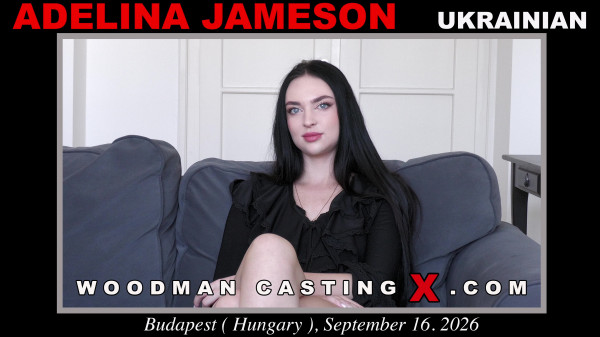

Visit Woodman Casting X and watch this scene!
Part One: Adelina Jameson Arrives in Budapest for Her September 2026 Casting
Budapest has been the setting for countless casting stories over the years, but every newcomer walks through the door carrying a different combination of expectations, nervousness and ambition. On September 16, 2026, it was Ukrainian actress Adelina Jameson who found herself sitting opposite French director Pierre Woodman.
The atmosphere at the beginning was deliberately uncomplicated. There was no elaborate set and no attempt to make the room look like a conventional movie studio. The focus was instead on conversation and on the young actress sitting in front of the camera.
Woodman began with the obvious question.
“So, Adelina, welcome to Budapest. How are you feeling?”
“Nervous,” she admitted with a smile. “But in a good way.”
“A good nervous?”
“Yes. The kind you have when you know something important might happen.”
“Have you been in Budapest for long?”
“Not really. I arrived recently, so I’m still discovering everything.”
“And what do you think of the city?”
“It is beautiful. Much bigger than I imagined, actually. And very international.”
For Adelina, coming from Ukraine added another chapter to a journey already shaped by considerable change. Budapest offered both geographical familiarity and a completely different professional environment.
Woodman asked her to introduce herself without thinking too much about the camera.
“That is difficult when there is a camera directly in front of me,” she laughed.
“Forget the camera.”
“Easy for you to say.”
“Pretend we’re drinking coffee.”
“There is no coffee.”
“That can be fixed.”
The exchange immediately changed the mood. Adelina laughed, and some of the stiffness visible during the opening minutes disappeared.
She described herself as curious, independent and interested in travelling. What seemed to intrigue Woodman most was not a rehearsed biography but the small details that emerged when the conversation wandered away from conventional interview questions.
“Are you usually shy?” he asked.
“At first.”
“And after ten minutes?”
“It depends who is sitting opposite me.”
“And me?”
She paused theatrically.
“I haven’t decided yet.”
Woodman laughed.
“That is a diplomatic answer.”
“It is an honest answer.”
The casting therefore began to acquire its own rhythm. Question, answer, joke, another question. Instead of racing through a checklist, the conversation repeatedly moved sideways into stories about travel, photography and how Adelina felt about seeing herself on camera.
She admitted that watching herself could sometimes feel stranger than being filmed.
“When somebody takes a photograph, I always look at it and think, ‘Is that really what I look like?’”
“Everybody does that,” Woodman replied.
“You too?”
“Of course.”
“I don’t believe you.”
“You’ll discover that directors can be insecure too.”
That exchange captured something essential about the opening portion of the meeting. Adelina was clearly conscious of being evaluated, yet she was willing to answer back rather than simply agree with everything the director said.
It also distinguished this meeting from the recent Budapest casting of Czech actress Adriana Silk, who had faced Woodman’s camera only a few days earlier, on September 11.
Adelina’s energy was different. Where another performer might fill every silence immediately, she occasionally stopped, considered the question, and then answered.
Woodman noticed.
“You think before answering.”
“Is that bad?”
“No. I’m just observing.”
“Then I’m observing you too.”
“What have you discovered?”
“That you ask questions even when you already know what answer you expect.”
Woodman smiled.
“Maybe I want to know whether you’ll surprise me.”
“Maybe I will.”
Part Two: Pierre Woodman Interviews Adelina Jameson About Ambition, Cameras and Boundaries
Once the introductory conversation was finished, the casting moved toward Adelina’s reasons for entering the industry.
Woodman asked the question directly.
“Why are you here?”
Adelina hesitated.
“That is a very short question with a very long answer.”
“I have time.”
“I wanted to try something completely different. Something where I have to be confident.”
“You don’t think you’re confident?”
“Sometimes I am. Sometimes I’m pretending.”
“Most people are.”
She smiled.
“Maybe confidence is pretending until you forget you’re pretending.”
The conversation then turned toward professional expectations. Adelina said she wanted to understand how productions worked rather than simply appearing in front of a camera without asking questions.
“What matters to you on a set?” Woodman asked.
“Knowing what is happening.”
“Meaning?”
“I don’t like surprises when they concern work. Tell me the plan. Tell me who’s there. Tell me what you expect. Then I can decide whether I’m comfortable.”
“That is important.”
“I think so.”
“And if you don’t like something?”
“I say no.”
The answer came quickly.
Woodman followed up.
“Are you comfortable saying no?”
“Yes.”
“Even when everyone else wants to continue?”
“Yes.”
There was no hesitation the second time either.
For any modern behind-the-scenes account of an adult production, that part of the discussion matters. Agreements, boundaries and expectations are not peripheral administrative details; they determine whether performers understand what is being proposed and whether they want to participate.
Adelina appeared particularly interested in how images would ultimately be presented.
“Do you think about the audience when you’re filming?” she asked.
“Sometimes,” Woodman replied. “But when I’m behind the camera I’m mostly thinking about the image.”
“So composition first?”
“Composition, personality, movement. The audience sees the result later.”
“And can you tell quickly if somebody works well on camera?”
“Usually.”
“How quickly?”
“Sometimes thirty seconds.”
Adelina raised an eyebrow.
“That’s terrifying.”
“Why?”
“Because I’ve already been here much longer than thirty seconds.”
“Exactly.”
“So have I passed?”
“I didn’t say that.”
“You didn’t have to.”
Again she laughed.
The relaxed back-and-forth became one of the meeting’s recurring features.
Another recent casting provided an interesting point of comparison. Spanish actress Mery Colt had sat for her own Budapest meeting with Woodman on September 9, only one week before Adelina’s appointment.
Yet casting sessions rarely become interchangeable simply because the setting and interviewer remain the same. Personality changes everything.
Adelina frequently reversed the interview.
“How many people have sat where I’m sitting?” she asked.
“A lot.”
“Thousands?”
“Over the years? Yes.”
“Doesn’t it become repetitive?”
“The questions sometimes. The people never.”
“That is a director’s answer.”
“What would be a better answer?”
“I don’t know. That’s why I’m asking the questions now.”
Woodman laughed.
“So you’ve taken over my casting?”
“For five minutes.”
“All right. Ask me something.”
Adelina thought for a moment.
“What makes somebody memorable?”
This time Woodman paused.
“Personality.”
“Not appearance?”
“Appearance gets attention. Personality is what you remember.”
Adelina nodded.
“Good answer.”
“Do I pass your casting?”
“Maybe.”
The role reversal lasted only a few minutes, but it gave the interview a welcome spontaneity. Adelina was no longer simply responding to the filmmaker; she was actively trying to understand the person and process on the other side of the camera.
Part Three: Adelina Jameson Leaves Her Mark on Pierre Woodman’s Budapest Casting Series
By the final section of the September 16 meeting, Adelina looked considerably more relaxed than she had at the beginning.
Woodman returned to questions about the future.
“What would you like to be doing one year from now?”
“One year is impossible to predict.”
“Try.”
“Travelling. Working. Hopefully doing projects I actually like.”
“Movies?”
“Maybe.”
“Photography?”
“Yes.”
“Something completely different?”
“Also possible.”
“So there is no master plan?”
“No. Is there supposed to be?”
“Some people have one.”
“And does it work?”
“Sometimes.”
Adelina smiled.
“Then I’ll make one later.”
The conversation shifted toward Ukraine and the experience of building a career while living through a period when many Ukrainians had seen ordinary life transformed.
Rather than presenting herself through a dramatic personal narrative, Adelina kept returning to practical ideas: independence, opportunity and making her own choices.
“Do you miss home when you’re travelling?” Woodman asked.
“Yes.”
“What do you miss?”
“People mostly. Certain places. Food.”
“Ukrainian food?”
“Obviously.”
“What should I try?”
“I’m not giving you a complete Ukrainian cooking lesson during my casting.”
“Why not?”
“Because then this video will be three hours.”
That humour remained until the final minutes.
Woodman asked how she thought the interview had gone.
“Better than I expected.”
“What did you expect?”
“A much more serious interview.”
“I’m very serious.”
“No.”
“No?”
“Definitely not.”
He laughed.
“What surprised you?”
“That after a while I forgot about the camera.”
“That is usually a good sign.”
“For an actress?”
“For anyone being filmed.”
She looked toward the lens.
“Now you’ve reminded me.”
“Sorry.”
“Too late.”
For Adelina, the most interesting progression during the casting was therefore not a dramatic transformation but a gradual disappearance of self-consciousness. At the beginning, every question seemed to remind her that she was being recorded. By the end, she was interrupting, joking and asking questions of her own.
Woodman finished with a simple one.
“If you could restart today’s casting, would you do anything differently?”
Adelina considered it.
“I would be less nervous.”
“But you couldn’t know that before doing it.”
“Exactly. So maybe I wouldn’t change anything.”
“And what will you remember?”
She looked around the room.
“The questions.”
“All of them?”
“No.”
“Which one?”
“The one about what makes somebody memorable.”
“And did you find the answer?”
“Ask me in a year.”
It was an appropriately open-ended conclusion.
The Budapest casting of September 16, 2026, presented Adelina Jameson as more than another name entering an already enormous archive of performers. Her Ukrainian background formed part of her story, but the lasting impression came from the personality revealed gradually during the conversation: cautious at first, increasingly playful, occasionally challenging and clearly interested in understanding the mechanics behind the camera as much as appearing in front of it.
For Woodman, whose casting format has always relied heavily on extended conversation before anything else happens, that willingness to talk—and occasionally turn the questions back on the interviewer—gave the session its character.
For Adelina, Budapest represented a new professional experience whose consequences could not yet be predicted.
Perhaps that was why her final exchange with Woodman seemed particularly appropriate.
“Last question,” he said.
“You’ve said that three times.”
“This time I mean it.”
“Okay.”
“Are you happy you came?”
Adelina smiled.
“Yes.”
“No hesitation?”
“No hesitation.”
“And would you come back?”
She paused just long enough to make the director wait.
“Ask me when you invite me.”
Woodman laughed.
“That’s a good answer.”
“I know.”
And with that, Adelina Jameson’s September 2026 Budapest casting came to its conclusion—not with a grand declaration about what would happen next, but with the same mixture of curiosity, confidence and humour that had gradually emerged throughout the interview.
Download complete video at Woodman Casting X