Olivia Zlota’s Audition with Pierre Woodman: A Philosophical Exploration of Culinary Arts
Written by PornGPT
In the heart of Warsaw, on a crisp autumn day, Polish actress Olivia Zlota stepped into the casting room of renowned director Pierre Woodman on October 13, 2024. What followed was not merely a traditional audition but a profound dialogue, weaving together cinema, philosophy, and the cultural significance of food.
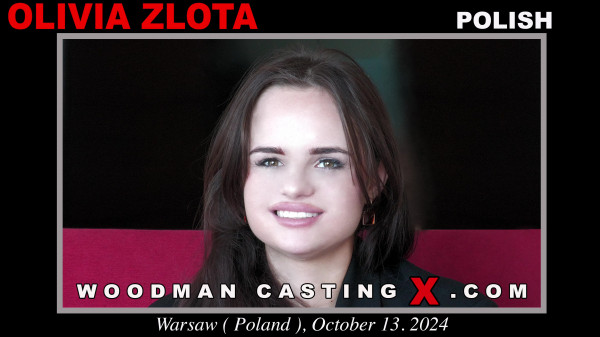
Visit Woodman Casting X and watch this scene!
The Meeting of Minds: Olivia Zlota and Pierre Woodman
The casting room was bathed in soft, natural light filtering through tall windows. A table in the corner held a spread of Polish delicacies—pierogi, placki ziemniaczane, and a steaming pot of herbal tea. Olivia Zlota entered, her presence both graceful and grounded. Pierre Woodman stood up, extending a hand.
“Olivia, it’s a pleasure. I’ve been following your work for some time now,” Pierre began, his French accent coloring his words.
“Thank you, Pierre. It’s an honor to be here,” Olivia replied, her voice calm yet tinged with anticipation.
Pierre gestured toward the table. “Please, help yourself. I believe good conversations happen over good food.”
Olivia smiled, selecting a pierogi. “It’s true. Food has a way of breaking barriers. It’s one of the oldest forms of connection.”
Pierre leaned in, intrigued. “That’s exactly the essence of the film. It’s not just about cooking—it’s about the human stories that unfold around it. Tell me, Olivia, what draws you to this project?”
She paused, considering her words. “It’s the philosophy behind it. Food isn’t just sustenance; it’s a language. Each dish tells a story—of culture, of love, of struggle. I want to explore that narrative through this character.”
Pierre’s eyes sparkled. “Beautifully said. The character you’re auditioning for views cooking as an almost spiritual practice. How do you relate to that?”
“I see cooking as a form of meditation,” Olivia answered. “It demands presence and mindfulness. When I cook, I’m fully engaged—feeling the textures, smelling the aromas, listening to the sizzle. It’s an act of love and care.”
- in wellness part i (Bonieboy, Olivia Zlota)
- Milana Cats (Woodman Casting X)
- Amirah Adara (Woodman Casting X)
Culinary Arts as a Philosophical Journey
Pierre nodded thoughtfully. “In many ways, that’s what I hope the audience will feel. That cooking is transformative, both for the one who cooks and the one who eats.”
Olivia took a sip of tea before continuing. “It reminds me of Gaston Bachelard’s idea of poetic reverie—the notion that the simplest acts can open doors to deeper understanding. Cooking has that power. It bridges the mundane and the sublime.”
Pierre chuckled. “A philosopher at heart, I see.”
“I studied philosophy before acting,” Olivia revealed. “I’ve always been fascinated by the intersections between art and life.”
Pierre leaned forward, his curiosity piqued. “Tell me, how would you prepare for this role? It’s not just about acting; it’s about embodying the character’s love and reverence for food.”
“I’d immerse myself in the culinary world,” Olivia replied earnestly. “Spend time in kitchens, watch chefs, understand their rhythms. But beyond the techniques, I’d want to capture the emotional core—the moments of triumph when a dish turns out perfectly, the quiet despair when it doesn’t. Cooking is deeply personal.”
Pierre nodded. “That’s precisely what I’m looking for. Someone who can portray the complexity and depth of this character.”
The room fell into a comfortable silence, filled only by the faint hum of Warsaw outside the window.
The Intersection of Film, Philosophy, and Food
Breaking the silence, Pierre posed a deeper question. “How do you think cinema can reshape our understanding of food?”
Olivia reflected before responding. “Cinema has the unique ability to magnify the rituals surrounding food. It can transform a simple act—like kneading dough—into something profound, almost sacred. Films like ‘Babette’s Feast’ or ‘Ratatouille’ show that cooking isn’t just about feeding the body but nourishing the soul.”
Pierre smiled. “Exactly. And in this film, I want to explore how food becomes a metaphor for connection, for healing, for identity.”
Olivia leaned forward, her enthusiasm evident. “Food carries memory. A single bite can transport you to childhood, to a distant place, to a forgotten emotion. It’s a powerful storytelling tool.”
Pierre’s eyes gleamed with excitement. “I think we’re on the same page. One scene I envision is the character preparing a dish from her grandmother’s recipe, struggling to get it right, and through that process, reconnecting with her past. It’s not about the perfect dish but the emotional journey.”
Olivia’s face lit up. “I love that. It speaks to the idea that imperfection holds beauty. That the cracks and flaws are what make something genuine.”
Pierre chuckled. “You’re giving me goosebumps. I think we could create something truly special together.”
As the audition wrapped up, Olivia stood, feeling a deep sense of connection—not just to the role but to the broader philosophical questions the film posed.
“Thank you, Pierre. This has been more than an audition—it’s been a dialogue,” Olivia said sincerely.
“The pleasure was mine, Olivia. I think you might be the soul this film needs,” Pierre replied.
As Olivia stepped out into the crisp Warsaw air, she felt a renewed sense of purpose. The audition had been more than a professional opportunity; it was a moment of philosophical and artistic communion.
A Philosophical Reflection
The encounter between Olivia Zlota and Pierre Woodman exemplifies how art, food, and philosophy intertwine. In an industry often focused on surface-level narratives, their dialogue delved into the essence of storytelling—how cinema can elevate everyday rituals like cooking into profound explorations of human connection.
Food, in this context, becomes more than a plot device; it’s a symbol of culture, memory, and emotion. It invites audiences to reflect on their own relationships with food—not just as consumers but as participants in a timeless tradition of sharing and storytelling.
Through this casting, Olivia and Pierre touched on deeper truths: that the act of cooking is both ordinary and extraordinary, that cinema has the power to reveal beauty in the mundane, and that philosophy isn’t confined to books but lives in our daily rituals.
As the film moves into production, one can only anticipate how this philosophical dialogue will manifest on screen—inviting viewers to not only watch but also feel, reflect, and perhaps, rediscover the profound connections found in the simple act of sharing a meal.
Watch full video at Woodman Casting X